Written by Abeer Abdullah Al-Sunbul
Published on Issue 1 Vol 13, 2025
Interdisciplinary teamwork and meticulous treatment planning are crucial for addressing complex dental disorders. Comprehensive management was essential following SBARD (SAUDI BOARD IN ADVANCE RESTORATIVE DENTISTRY) recommendations and treatment stages. Essential components include assessment of tooth restorability, preventive therapy, extraction of non-restorable teeth, dietary analysis, carious teeth restoration, endodontic treatment, and pre-prosthetic surgical care, which involves dental imp
Read More
Written by Gabrielė Maleckaitė
Published on Issue 1 Vol 13, 2025
Oral mucosal melanoma (OMM) is a rare and aggressive malignancy with a poor prognosis and high metastatic potential. Its subtle clinical presentation and diagnostic challenges often result in late-stage detection, complicating treatment. Advanced imaging techniques, such as PET and MRI, have significantly improved staging accuracy. Additionally, noninvasive methods and molecular profiling show promise for early detection and personalized treatments. Surgical resection remains the cornerstone of
Read More
Written by Manisha Bala Rathy Rajadurai
Published on Issue 1 Vol 13, 2025
Pulpectomy is an essential dental procedure aimed at preserving primary teeth affected by severe infections or irreversible pulpitis. Zinc oxide eugenol (ZOE), a commonly used obturating material, presents limitations including slow resorption, cytotoxicity, and potential adverse effects on developing permanent teeth. In response to these challenges, a novel obturating material combining zinc oxide, calcium hydroxide, and metronidazole has been developed. This study aimed to compare the cytotoxi
Read More
Written by Chatuan Mariam
Published on Issue 1 Vol 13, 2025
Currently, extraction is increasingly avoided to alleviate crowding. This study aimed to evaluate changes in the buccal alveolar bone during the alignment phase of orthodontic treatment without extractions using cone beam computed tomographic. Two reviewers, without regard to language limitations, performed a manual search through June 2024 and an electronic search of web databases (Medline, Science Direct, Scopus, and Web of Science). Clinical studies, both randomised and non-randomized, were c
Read More
Written by Abdulrahman Mohammed Alnafisah
Published on Issue 1 Vol 13, 2025
Review paper for the decision of applications and clinical efficacy of laser in restorative and prosthodontic dental procedures based on recent developments and utility. Lasers have been used in dentistry starting from the 1960s; lasers in this field offer a less invasive approach compared to traditional ones. Laser offers many benefits, including accurate cutting, minimal pain sensation to the patient, and fast healing. Diode laser: popular and affordable, is categorized as a diode or Neodymium
Read More
Written by Afaf El Merouani Drissi
Published on Issue 1 Vol 13, 2025
The present case study demonstrates the effective use of a Quad'helix appliance in combination with Class III mechanics for the treatment of a growing skeletal Class III malocclusion. The patient was a 10-year-old girl who had an anterior crossbite as her main complaint. Clinical examination revealed a skeletal Class III malocclusion with a retrusive maxilla. Orthopedic and orthodontic intervention included slow maxillary expansion followed by 26 months of combined treatment. The therapeutic
Read More
Written by Jokkin Jesima
Published on Issue 1 Vol 13, 2025
A randomized controlled clinical trial was conducted to evaluate the effect of local drug delivery (LDD) of Acmella oleracea (Akarkara) and Acacia catechu (kattha) gels as an adjunct to scaling and root planing (SRP) in generalized chronic periodontitis patients. Thirty patients with ninety sites aged 25–65 years with generalized chronic periodontitis having pocket probing depth (PPD) of more than or equal to 5 mm on the basis of inclusion and exclusion criteria were selected. They were treated
Read More
Written by Matteo Zurlo
Published on Issue 1 Vol 13, 2025
Gingival recession (GR) is a common finding seen in the periodontics clinic. It has a significant functional and esthetic impact on the patient's dentition and quality of life. The current study aimed to develop the descriptive mathematical models for different domains of GR based on the data obtained from the North Indian population. Settings and Design: Cross-sectional observational study. Consecutive 130 participants were enrolled between June and August 2019. Complete case history and th
Read More
Written by Geice Ribeiro da Silva
Published on Issue 1 Vol 13, 2025
About half of the cases of gingival recession are associated with the noncarious cervical lesion (NCCL), resulting in combined defects (CDs). NCCL negatively affects the root coverage outcomes. In addition, considering the morbidity associated with graft harvesting, soft-tissue substitutes (STSs) appeared as a suitable option for connective tissue grafts for surgical root coverage. Currently, the literature addressing the therapy of CDs employing STSs is scarce. Thus, the present review aimed to
Read More
Written by Georges Lognay
Published on Issue 1 Vol 13, 2025
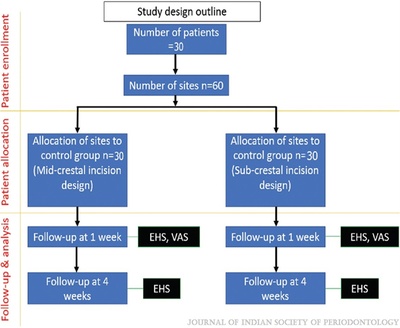
This randomized controlled trial aimed at comparing a novel incision design with a conventional mid-crestal incision design for implant placement to achieve complete closure of the surgical site. Proper flap margin approximation is pivotal for surgical wound healing in patients undergoing dental implant treatment with or without bone augmentation. A clinical study was conducted at the department of implantology with a total number of 30 patients. Patients with bilateral edentulous sites for whom
Read More
Written by Wei He
Published on Issue 1 Vol 13, 2025
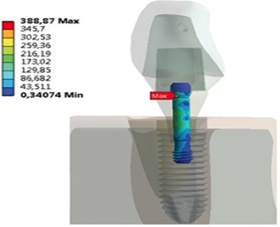
To analyze through finite element analysis the stress distribution in peri-implant bone tissues, implants, and prosthetic components induced by the socket shield (SS) technique in comparison to other techniques used to treat tooth loss. A three-dimensional model of a superior central incisor crown supported by implant was modeled and three different placement conditions were simulated: SS – 2.0-mm-thick root dentin fragment positioned between the alveolar buccal wall and implant; heterologous bo
Read More
Written by Roberto Lozano
Published on Issue 1 Vol 13, 2025
Insufficient width of keratinized gingiva (WKG) leads to clinical attachment loss (CAL) and eventually periodontal destruction. Free gingival graft (FGG) is the gold standard to increase WKG but requires a second surgical site and poor esthetics outcomes. Hence, alternatives like collagen matrix (CM) have been developed. The present study aims to evaluate the efficacy of CM versus FGG in augmenting WKG in the lower anterior. Twenty patients with inadequate WKG were enrolled and allocated into tw
Read More
Written by Sofia Meier
Published on Issue 1 Vol 13, 2025
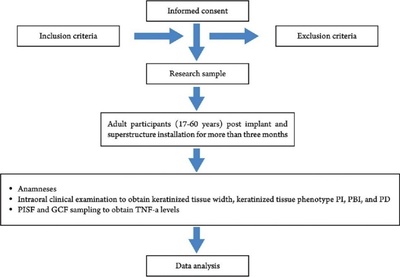
Studies have shown the importance of keratinized tissue around implants to prevent peri-implant diseases. This study aims to analyze the correlation of keratinized tissue around implants and teeth with clinical parameter scores and tumor necrosis factor-alpha (TNF-α) levels. A cross-sectional study of 20 adults with 20 dental implants and 20 contralateral teeth that have functioned suprastructurally for more than 3 months without any systemic diseases. Keratinized tissue around implant and tooth
Read More
Written by Maja Steinbach
Published on Issue 1 Vol 13, 2025
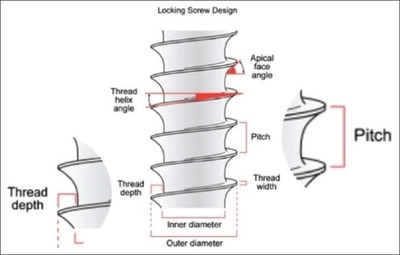
Dental implant is a material used in replacing missing teeth. The osseointegration process of dental implants will be affected by the macrodesign of the fixtures. This study aimed to review the dental implant macrodesign in the past 10 years. This study was conducted in a systematic review method using two electronic databases (PUBMED and Science Direct). Only randomized controlled trials (RCTs) published in the last 10 years were used for this review. All the search results were filtered using
Read More
Written by Jihyun Oh
Published on Issue 1 Vol 13, 2025
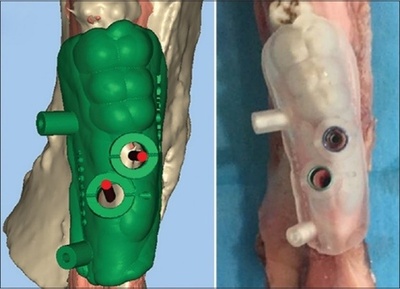
Computer-guided surgery has been increased in recent years. Nonetheless, few data are available on the validation of this technique for immediate implant placement. The purpose of this in vitro study was to evaluate the accuracy of computer-guided surgery in immediate implant placement. Cone-beam computed tomography scans (CBCTs) and virtual models were obtained of eight fresh pigs hemi-mandibles to perform the digital planning of implants placement. Fifteen implants were simulated, and surgical
Read More
Written by Ateet Kakti
Published on Issue 1 Vol 13, 2025
This work aims to assess parents’ knowledge and preferences regarding stainless steel, zirconia, and Bioflex crowns for primary molars. A study of 345 parents found that aesthetic values, cost, and the dentist’s opinion strongly influenced their choice. Among participants, 58.5% chose zirconia crowns for their natural aesthetics and long-wear durability, and 44% believed zirconia crowns were the most economical option. The trend towards greater value-consciousness did not necessarily translate i
Read More
Written by Zeeshan Qamar
Published on Issue 1 Vol 13, 2025
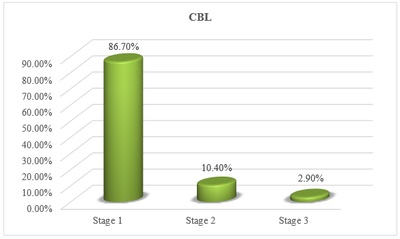
This research examines the extent and phases of crestal and apical bone resorption in implant-supported restorations, as assessed with CBCT, and analyzes the role of age and gender as risk factors for crestal and apical bone loss around dental implants. CBCT study involving 753 cross-sectional scans showed a high proportion of early-stage bone resorption in Class I (77.3%), apical bone loss, and 86.7% of Stage I crestal bone loss. Years in function showed a positive correlation with crestal bone
Read More
Written by Zeeshan Qamar
Published on Issue 1 Vol 13, 2025
Radiographic evaluations enable clinicians to detect hidden composite defects such as voids and margin irregularities and their assessment remains vital in dental school clinics especially for restorations done by supervised student trainees. These clinical environments serve as effective testing grounds for assessing restorative quality and tracking the pattern of failed restorations. A retrospective study utilizing the patients’ data such as various types of radiographs. Patients’ files from N
Read More
Written by Othman AlOthman
Published on Issue 1 Vol 13, 2025
This research assesses the ability of Clear Aligner Therapy (CAT) to reduce root angulations in the SQ anterior teeth following treatment in adult patients. A retrospective design was used essentially and data were obtained from cephalometric X-rays of 30 patients who had undergone CAT treatment. Altogether, using statistical analysis, the present outcomes infer moderate success in handling angular adjustments, reflected in parameters which include UI-SN, UI-FH, and UI-LI. But, increase in the O
Read More